Tech
HRMtaila Explained: The Emerging AI-Powered Approach Reshaping Modern Human Resource Management

Introduction
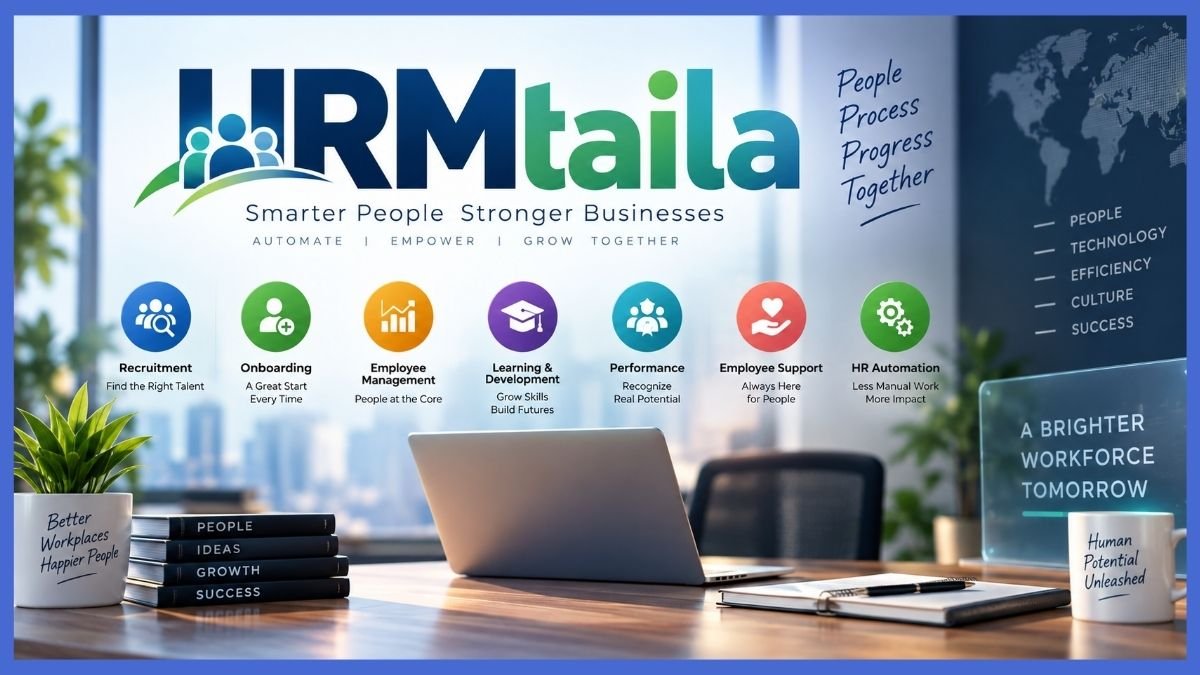
The way organisations manage people is changing rapidly. Recruitment is becoming increasingly digital, employee information is moving into centralised systems, routine administrative work can be automated, and artificial intelligence is beginning to support decisions that once depended entirely on manual processes. Within this changing environment, HRMtaila has emerged as an unusual online term connected with human resource management, artificial intelligence, automation, workforce information, and the wider transformation of HR technology.
At present, HRMtaila should be approached carefully. It does not have a universally established definition, and there is not enough reliable public information to describe it confidently as a specific commercial software platform, recognised company, or formal technology standard. Instead, the term is increasingly being used in discussions about AI-powered human resource management and the technologies that can help organisations handle hiring, onboarding, employee support, workforce data, training, performance information, and repetitive administrative tasks more efficiently.
Understanding HRMtaila is therefore less about memorising the features of one particular product and more about understanding the wider movement towards intelligent, automated, and data-supported HR management.
What Is HRMtaila?
HRMtaila can currently be understood as an emerging digital term associated with the combination of Human Resource Management (HRM) and modern technologies such as artificial intelligence, automation, digital workflows, and workforce analytics. The first part of the term naturally resembles the familiar abbreviation HRM, although the complete origin and intended meaning of the word have not been authoritatively documented.
This distinction matters because unfamiliar technology terms can quickly gain visibility online before their identity becomes clear. Several articles may repeat the same description, but repetition alone does not establish an official definition. Until stronger primary documentation becomes available, it is more accurate to discuss HRMtaila as a developing concept or keyword rather than presenting it as a fully documented product.
In practical terms, the concept surrounding HRMtaila reflects an important question facing modern organisations: how can technology make HR operations faster and more organised without removing the human judgment that remains essential when dealing with employees?
Why HRMtaila Is Attracting Attention
Human resource departments manage a surprisingly wide range of responsibilities. HR professionals may need to advertise vacancies, review applicants, organise interviews, prepare employment documentation, support new employees, maintain staff records, monitor attendance, coordinate training, answer workplace questions, prepare reports, and support managers with workforce planning.
When all these activities depend heavily on manual work, administrative pressure can grow quickly. Digital systems can reduce part of that burden by organising information and automating predictable tasks. This is where the broader idea represented by HRMtaila becomes relevant.
An intelligent HR environment could help staff find information faster, identify missing documents, organise applications, prepare routine reports, send reminders, categorise employee requests, or highlight workforce patterns that deserve human attention. Technology becomes most valuable when it supports professionals rather than pretending that every workplace decision can be reduced to an automated calculation.
HRMtaila and AI-Powered Recruitment
Recruitment is one of the most obvious areas where AI in HR can make a noticeable difference. Large organisations may receive hundreds or even thousands of applications for open positions. Reviewing, organising, communicating with candidates, scheduling interviews, and maintaining recruitment records can consume considerable time.
AI-assisted HR systems can help organise candidate information, identify applications matching predefined job requirements, automate routine communication, and keep recruitment workflows structured. This can allow recruiters to spend more time speaking with suitable candidates and understanding qualities that cannot always be captured through structured data.
However, recruitment technology also requires caution. Automated systems should not become unquestioned decision-makers. Poorly designed criteria, incomplete information, or biased historical data can produce unfair results. Human review therefore remains important, particularly when technology influences who receives opportunities.
The most responsible interpretation of HRMtaila is not AI replacing recruiters, but technology supporting recruiters while meaningful employment decisions remain subject to appropriate human oversight.
Improving Employee Onboarding
A new employee’s first few days can influence how quickly they understand their responsibilities and become comfortable within an organisation. Unfortunately, onboarding can involve repetitive paperwork, multiple information requests, training schedules, policy documents, access permissions, and introductions across several departments.
An HR system inspired by the HRMtaila concept could make this process easier to coordinate. Automated workflows might remind new employees about required forms, provide access to introductory materials, organise training activities, and notify managers when important onboarding steps remain unfinished.
The result could be a more consistent onboarding experience. Instead of HR staff repeatedly checking routine administrative requirements, they could dedicate more attention to personal introductions, employee questions, workplace expectations, team integration, and organisational culture.
That balance illustrates one of the strongest potential advantages of intelligent HR technology: allowing machines to handle predictable processes while people focus on interactions requiring empathy and judgment.
HRMtaila and Everyday Employee Support
Employees regularly ask HR departments similar questions about leave policies, workplace procedures, benefits, payroll dates, training requirements, internal documentation, or company policies. Answering these questions manually can become time-consuming, particularly in larger organisations.
AI-assisted employee support could make basic information easier to access. A well-designed system might help employees locate approved policies, direct them towards the correct forms, explain standard procedures, or route more complicated matters to the appropriate HR professional.
This does not mean sensitive employee concerns should automatically be managed by a chatbot or algorithm. Complaints involving discrimination, harassment, personal hardship, disputes, disciplinary matters, confidential medical information, or workplace conflict often require human understanding and careful handling.
The strongest HR technology therefore knows its limits. Automation should make simple information easier to obtain while creating clear paths towards human assistance when circumstances require it.
Workforce Analytics and Better Organisational Insight
Modern businesses generate significant amounts of workforce information. Attendance patterns, recruitment results, employee turnover, training participation, skills availability, internal movement, and performance information can all provide valuable organisational insight when interpreted responsibly.
The broader idea associated with HRMtaila includes using technology to organise and analyse such information. Managers may use workforce analytics to understand where staffing gaps exist, which departments need additional training, what skills may become important, or where operational problems are emerging.
Data can improve visibility, but numbers should not be treated as complete explanations of employee behaviour. For example, a statistical pattern might show unusually high turnover in one team, but it cannot necessarily explain why people are leaving. Human investigation may reveal leadership problems, limited career progression, scheduling pressures, compensation concerns, or entirely different causes.
For that reason, workforce analytics should support questions rather than automatically provide final conclusions.
Data Privacy and Security Matter
Human resource information is among the most sensitive categories of organisational data. Employee files can contain addresses, financial information, compensation details, emergency contacts, performance records, identification information, leave records, and other private material.
Any organisation considering AI-powered HR technology should therefore make data privacy and security a central requirement rather than an afterthought. Access should be limited according to legitimate job responsibilities, sensitive information should be protected, and organisations should understand where employee data is stored, how it is processed, who can access it, and how long it is retained.
This is especially important when artificial intelligence is involved. Organisations should avoid sending confidential employee information into systems without understanding how the information will be used. Convenience cannot replace responsibility when workplace data concerns real people.
Potential Benefits of the HRMtaila Concept
The appeal of HRMtaila comes largely from the practical advantages associated with intelligent HR management. Automation can potentially reduce repetitive administrative work, create more consistent workflows, improve access to routine information, organise large quantities of data, and help HR professionals identify issues requiring attention.
For employees, better systems may mean quicker answers, simpler onboarding, clearer access to workplace information, and fewer delays caused by manual processing. For HR teams, technology can reduce time spent on repetitive tasks and increase the time available for employee development, workforce planning, conflict resolution, leadership support, and organisational culture.
However, these benefits depend heavily on implementation. Poorly configured technology can create new problems instead of solving old ones. A complicated system that employees cannot understand may increase frustration, while unreliable automation can generate additional administrative work.
Technology should therefore be evaluated according to whether it genuinely improves the employee and HR experience.
Challenges and Risks of AI-Driven HR Management
The excitement surrounding AI should not hide its limitations. HR decisions affect careers, incomes, professional development, and workplace opportunities. Incorrect or unfair automated decisions can consequently have significant consequences.
Possible concerns include algorithmic bias, inaccurate data, weak privacy controls, excessive monitoring, unclear decision-making processes, security vulnerabilities, and overdependence on automation. Another risk is assuming that because an automated system produces a numerical score or recommendation, the result must be objective. Technology can inherit weaknesses from its training data, design choices, input information, and organisational policies.
Businesses adopting intelligent HR technology therefore need clear governance. Employees should understand when automated systems are being used, important decisions should remain reviewable, and organisations should regularly examine whether technology is operating as intended.
Is HRMtaila an Actual Software Platform?
This is one of the most important questions surrounding the keyword.
At present, there is insufficient reliable public evidence to confidently describe HRMtaila as an established commercial HR software platform. A conventional software product would normally have identifiable ownership, official documentation, pricing information, technical specifications, customer support resources, integration details, security documentation, and a clearly established company presence.
Those details should not be invented where they cannot be verified.
Readers should therefore be cautious about pages that confidently present specific HRMtaila pricing packages, founders, launch dates, applications, headquarters, subscriptions, proprietary features, or customer numbers without reliable evidence.
For now, HRMtaila is better treated as an emerging online term linked with the wider development of intelligent HR technology.
The Human Side of HR Should Remain Central
Despite major advances in automation, human resources remains fundamentally concerned with people. Employees are not simply collections of performance metrics, attendance records, skills scores, or productivity statistics.
Workplace situations often require context. A person struggling at work may need training rather than discipline. An employee considering resignation may be experiencing a problem that data cannot reveal. A candidate with an unconventional career history may possess valuable abilities that an automated screening process overlooks.
The future of HR is therefore unlikely to be purely automated. A more realistic direction combines technology, data, professional judgment, transparency, and empathy.
HRMtaila, when understood as an idea rather than an unverified product, fits naturally into this human-centred model.
The Future of HRMtaila
The future identity of HRMtaila remains uncertain because the keyword is still developing. It may continue functioning primarily as an online label for AI-assisted human resource management, or clearer documentation could eventually connect it with a particular project, platform, company, or technology.
What is much clearer is the direction of the wider HR industry. Artificial intelligence and automation are becoming increasingly relevant to recruitment, employee services, learning, administrative workflows, reporting, workforce planning, and organisational analysis.
The organisations likely to gain the most value from these technologies will not simply automate everything possible. They will decide carefully which processes benefit from automation and which decisions require meaningful human involvement.
FAQs
What is HRMtaila?
HRMtaila is an emerging online term currently associated with artificial intelligence, automation, workforce technology, and modern human resource management. It does not yet have one universally established definition.
Is HRMtaila a real HR software platform?
There is currently insufficient verified information to confidently identify HRMtaila as a widely established commercial HR software platform. It is safer to describe it as an emerging term connected with AI-powered HR management.
How could HRMtaila help HR departments?
The concept can be associated with automating repetitive administration, supporting recruitment workflows, organising employee information, assisting onboarding, improving access to routine HR information, and analysing workforce data.
Can HRMtaila replace HR professionals?
Technology can automate and assist many routine HR activities, but important workplace decisions often require human judgment, empathy, context, accountability, and communication. AI is better treated as a supporting tool rather than a complete replacement for HR professionals.
Is employee information safe with AI-based HR systems?
Safety depends on the individual system, its security practices, access controls, data policies, and how the organisation uses it. Businesses should carefully evaluate privacy and security before placing confidential employee information into any digital HR platform.
Why is HRMtaila becoming a searched term?
Its growing visibility appears connected with increased interest in artificial intelligence, automation, and the digital transformation of HR. Because the term’s precise origin remains unclear, readers should distinguish between verified information and interpretations repeated across websites.
Conclusion
HRMtaila represents an interesting example of how new terminology can emerge alongside rapidly changing technology. Although it is increasingly associated with artificial intelligence, HR automation, workforce analytics, recruitment, employee support, and digital HR management, there is currently not enough reliable evidence to treat it as an established software brand or recognised industry standard.
The larger subject behind the keyword is nevertheless important. Artificial intelligence can help organisations streamline repetitive HR processes, organise information, improve access to routine support, and identify useful workforce patterns. Yet the effectiveness of these technologies depends on responsible implementation, reliable data, privacy protection, transparency, fairness, security, and continued human oversight.
For organisations exploring the future of human resource management, the strongest lesson from HRMtaila is straightforward: technology should strengthen human resources, not remove the human element from it.



HRMtaila Explained: The Emerging AI-Powered Approach Reshaping Modern Human Resource Management

Who Is Julie Asher-Smith? The Essential Story Behind Dina Asher-Smith’s Mother and Life Away From Fame

Who Is Graham Rooney? The Powerful Story Behind Wayne Rooney’s Brother and His Quiet Life Outside Fame

Area Code 603: The Essential Guide to New Hampshire’s Trusted Local Phone Code

Who Is Andrew Bermejo? The Essential Story Behind Sally Phillips’ Ex-Husband and Life Away From Fame

Who Is Alex Di Pasquale? The Essential Truth About Alex Di Pasquale, Anna Williamson’s Husband, and Life Away From Fame

Who Is Toni Terry? The Story Behind John Terry’s Wife and Her Life Beyond Football Fame

Who Is Kairo Walker? The Essential Story Behind Kairo Walker, Kyle Walker’s Son, and Life Away From Fame

Who Is Ninette Veale? The Powerful Real Story Behind Russell Howard’s Mother and a Life Away From Fame

Black Dahlia Flower: The Powerful Mystery Behind This Stunning Near-Black Bloom
HRMtaila Explained: The Emerging AI-Powered Approach Reshaping Modern Human Resource Management
Who Is Julie Asher-Smith? The Essential Story Behind Dina Asher-Smith’s Mother and Life Away From Fame
Who Is Graham Rooney? The Powerful Story Behind Wayne Rooney’s Brother and His Quiet Life Outside Fame
Area Code 603: The Essential Guide to New Hampshire’s Trusted Local Phone Code
Who Is Andrew Bermejo? The Essential Story Behind Sally Phillips’ Ex-Husband and Life Away From Fame
Who Is Alex Di Pasquale? The Essential Truth About Alex Di Pasquale, Anna Williamson’s Husband, and Life Away From Fame
Who Is Toni Terry? The Story Behind John Terry’s Wife and Her Life Beyond Football Fame
Who Is Kairo Walker? The Essential Story Behind Kairo Walker, Kyle Walker’s Son, and Life Away From Fame
Who Is Ninette Veale? The Powerful Real Story Behind Russell Howard’s Mother and a Life Away From Fame
Black Dahlia Flower: The Powerful Mystery Behind This Stunning Near-Black Bloom

 Celebrity5 months ago
Who Is Sarina Taylor? The Remarkable Story Behind Roger Taylor’s Private Creative Partner
- Celebrity6 months ago
Who Is Tim Dynevor? The Acclaimed Writer Behind a Famous TV Family
- Celebrity5 months ago
Who Is Caris Ball? The Remarkable Story Behind Chris Wolstenholme’s Wife
- Celebrity5 months ago
Who Is Caitlin Phaneuf? The Inspiring Life of the Woman Married to Def Leppard’s Vivian Campbell